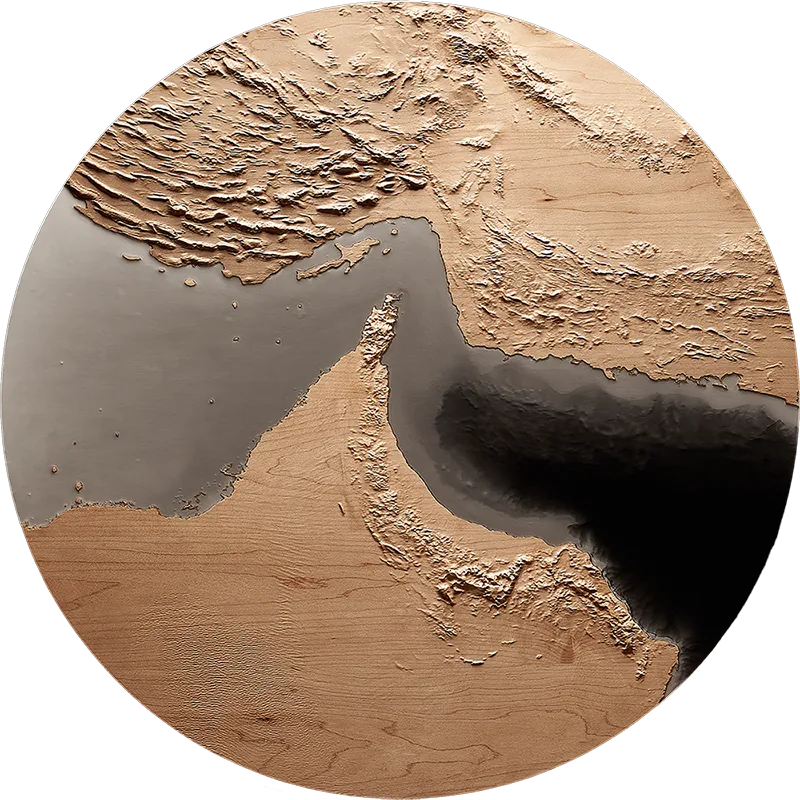
Hormuz
Arabian Plate margin
Relief of the Strait of Hormuz, sculpted in maple and held within translucent black resin. The wood traces the drowned valleys of the Musandam Peninsula and the salt islands standing in the passage. Resin carries the water between them, from the shallow basin inside the strait to the deeper Gulf of Oman beyond it.
Shaping of Place
The strait sits where the Arabian plate is driving north into Eurasia. That collision raised the Zagros mountains along the far shore and continues to close the distance between the two landmasses.
The islands standing in the passage are salt. Ancient evaporite, buried under kilometers of younger rock and lighter than the load above it, rises through that rock in domes. Some of those domes have reached the surface and become islands, and the salt beneath them is still moving upward.
On the southern side the Musandam Peninsula is bending downward as the plate flexes beneath the collision. Its river valleys have been flooded nearly to the ridgelines, leaving a coast of steep inlets cut by water and now filled by it.
Inside the strait the water is shallow enough that the basin stood dry at the height of the last glaciation, drained by a river system that is now beneath it. The strait is the sill between that shallow ground and the deeper water outside.
Hormuz relief, full composition.
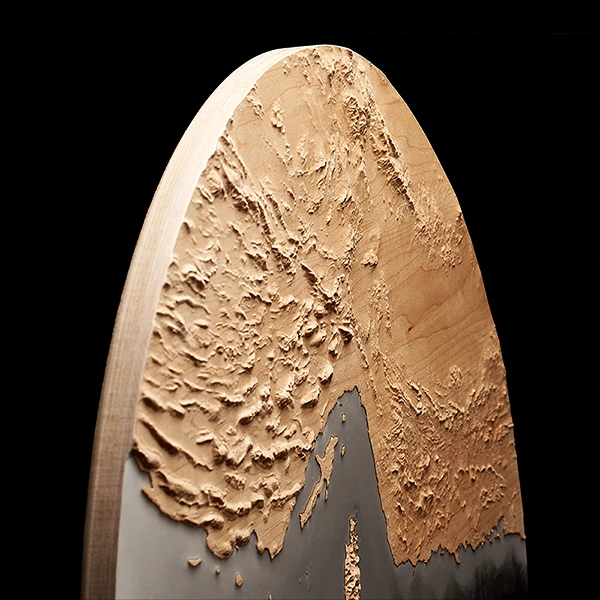
Installed relief, angled view.
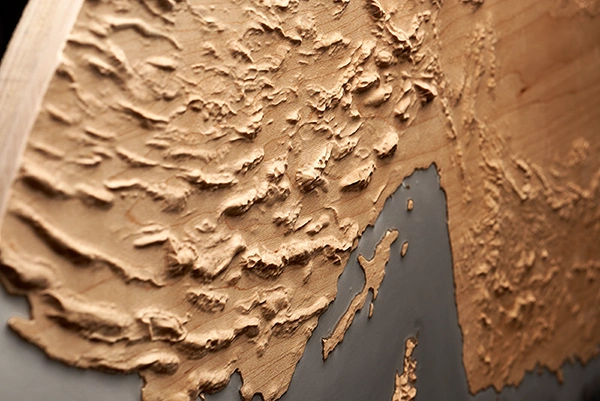
Detail of the Zagros Mountains.
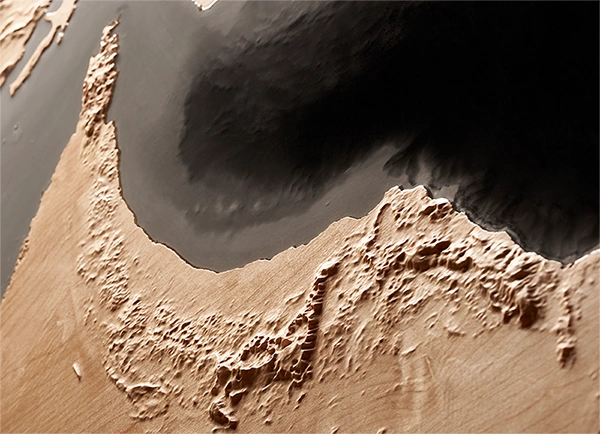
Detail of Oman's Al-Batinah Coast.
To be exhibited in The Shape of Force, Firefly Bicycles, 423 Pleasant St, Melrose, MA, November 15–16, 2026.
Studio work. Inquire about available work.