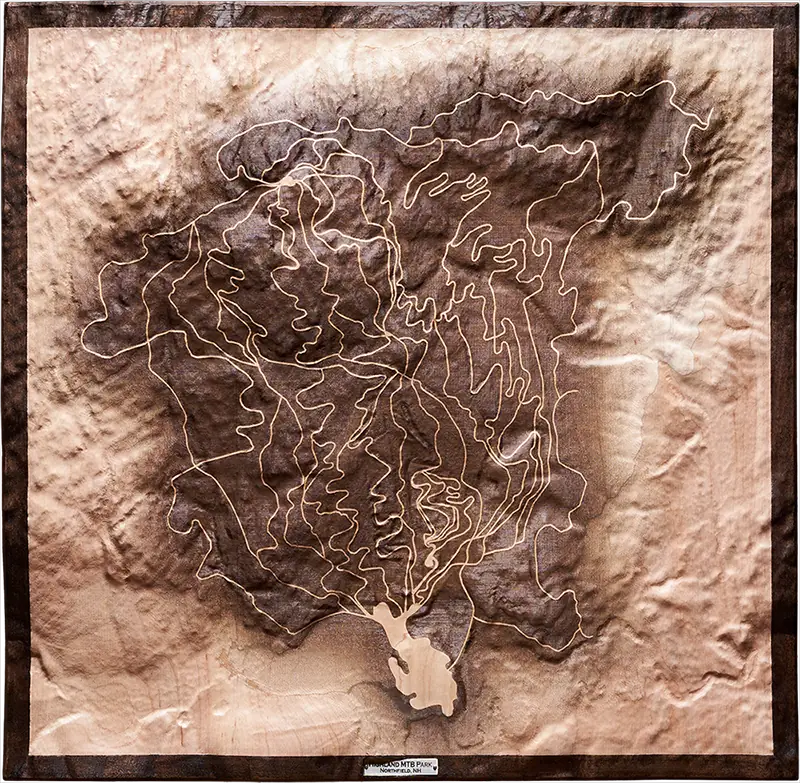
Highland Mountain
Northfield, New Hampshire
Relief of Highland Mountain, a lift-served mountain bike park in Northfield, New Hampshire, sculpted in maple and walnut. The relief follows the mountain’s changing grade, technical sections, and descending trail system. Laser-etched trails map the network from flow lines and jumps to steeper, more technical terrain.
Shaping of Place
Highland Mountain rises from the ancient metamorphic and igneous bedrock common to central New Hampshire, shaped over time by mountain-building, erosion, and glacial movement. Its underlying grade gives the mountain its structure, with rounded slopes, changing pitch, and drainage lines carrying movement from upper terrain toward the base. Glaciation softened the larger forms while leaving enough relief for steep transitions, exposed sections, and descending terrain. Water still cuts those drainage lines deeper each year, and the grade the trails follow keeps shifting beneath them.
The mountain is defined by slope, changing pitch, and technical terrain. Exposed ridges, fall lines, and shallow valleys organize how the terrain moves downward, creating natural routes across the face. Built trails follow that geography, using the mountain's existing contours, compression, and transitions to turn landform into passage.
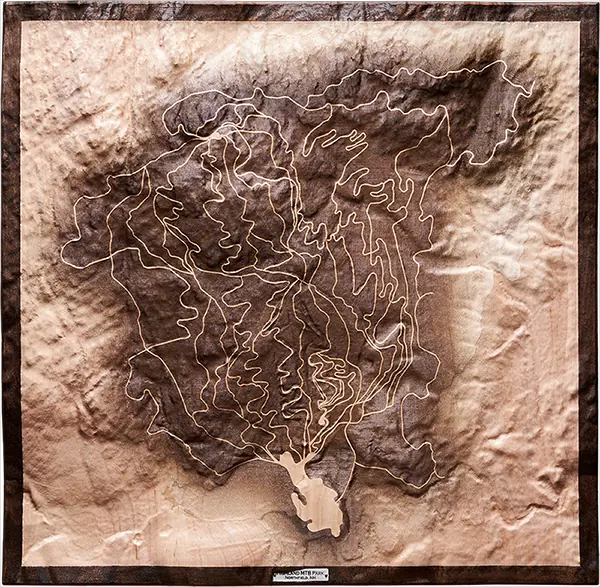
Highland Mountain relief, full composition.
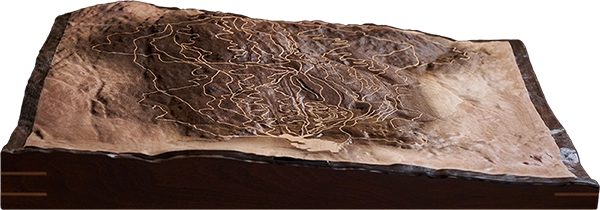
Terrain relief from base to summit.
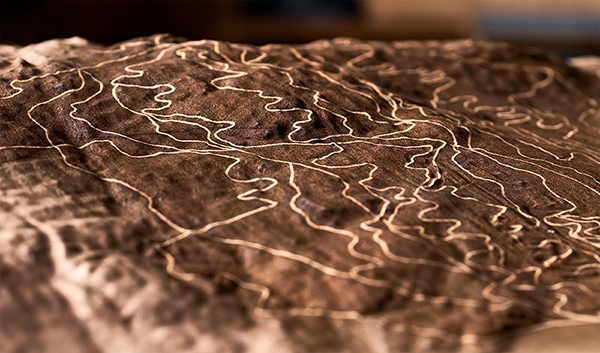
Technical terrain and laser-etched trails.
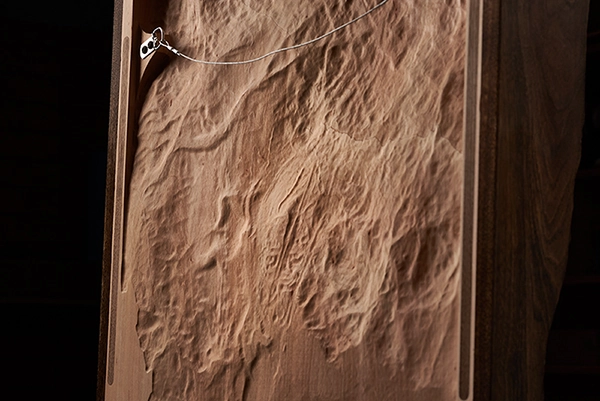
Inverse relief detail.
A longtime Highland rider commissioned this piece for the friend who learned its lines alongside him. The story centered on repeated descents, shared progression, and the rhythm of returning to the same mountain together.
Specific riding memories needed to remain traceable within the terrain. The design was shaped around exact moments on exact trails: the berm that taught flow, the rock section that demanded patience, the jump that was finally cleared.
Strategic vertical exaggeration was used to give Highland’s terrain enough physical presence at this scale. The laser-etched network was kept clear, with those memories held inside the larger sculpted shape of the mountain.
Artist's Note
Private collection.